
What Is Leadership? Meaning, Definition and Qualities
Leadership is the ability to influence people towards a shared purpose.
It can come from a formal position, but people also lead through their expertise, judgement and the trust others place in them.
At Leadership Trust, we focus on how leadership is experienced: what people do, how they respond to others and what happens when they are under pressure. You can learn more about this through Leadership Trust’s approach to leadership development.
What is a leader?
A leader helps people make progress towards a shared goal. They may set direction, ask a question that changes a decision or give someone the confidence to take responsibility. Their influence depends on how they act and how others respond.

Why is leadership important?
Leadership matters because people rarely perform at their best through process alone.
Plans, systems and structures are important, but people still need direction, confidence and a reason to commit their energy. Good leadership helps connect individual effort to a wider purpose.
Strong leadership can support:
clearer decision-making
stronger team performance
higher levels of trust
better communication
improved accountability
greater resilience during change
more confident problem solving
stronger organisational culture
Leadership becomes particularly important when priorities change or resources are stretched. People need to understand the decisions being made, raise concerns and know where they can act.
For a deeper look at how leaders shape culture and performance, read our article on why behaviour change is the best investment.
What makes a good leader? Skills and qualities
A good leader helps people understand where they are going, why it matters and how they can contribute.
Good leaders still make mistakes, face uncertainty and continue learning. What separates them is their willingness to take responsibility for their behaviour and the effect it has on others.
Leadership skills are abilities people can practise; qualities shape how they use those abilities. Six areas matter in everyday leadership:
Self-awareness: noticing your habits and how other people experience your behaviour.
Judgement: weighing the available information, making decisions and recognising when to ask for help.
Communication and listening: explaining what is needed, asking questions and making room for disagreement.
Integrity: acting consistently, keeping commitments and being honest when something goes wrong.
Adaptability: adjusting your approach as the task, team or circumstances change.
Responsibility: taking ownership of decisions, addressing problems and giving others the support and authority to act.
Skills and qualities work together. A leader may be technically good at communicating, but without empathy or self-awareness their message may still fail to land. A leader may have confidence, but without humility they may overlook the views of others.
For a related view on how these capabilities develop over time, read our guide on what leadership development is.

Leadership, communication and trust
Leaders need to explain direction, share expectations, give feedback and listen carefully to what people are saying. Effective communication also means paying attention to what is not being said, especially when people are uncertain, frustrated or reluctant to speak openly.
Clear expectations help people act with confidence. Listening gives a leader the chance to notice concerns and information they might otherwise miss.
For more on this area, read our article on active listening.
Trust is built through consistency. People pay attention to whether a leader’s actions match their words, whether they listen properly, whether they treat people fairly and whether they take responsibility when things become difficult.
Common leadership styles
There are many different leadership styles, and each can be useful in the right context. Effective leaders learn to recognise their natural leadership style while adapting their behaviour to the needs of the situation, the task and the people involved.
Common leadership styles include:
Transformational leadership, where leaders inspire people through vision, purpose and change
Transactional leadership, where performance is guided through structure, expectations and reward
Autocratic leadership, where the leader retains decision-making authority and gives direct instructions
Servant leadership, where the leader focuses on supporting and developing others
Democratic leadership, where team members are involved in discussion and decision-making
Delegative leadership, where responsibility is passed to capable people with appropriate trust
Situational leadership, where the leader adapts their approach depending on the person, task and context
Authentic leadership, where consistency, honesty and self-awareness shape how the leader behaves
No single style works in every situation. A team facing a crisis may need clear and direct leadership. A team solving a complex problem may need more discussion and participation. A developing team member may need guidance, while an experienced person may need trust and space.
Leadership becomes stronger when people understand their default style and learn when to adjust it.
For more on how teams work together, read our article on forming effective team dynamics.
Leadership vs management
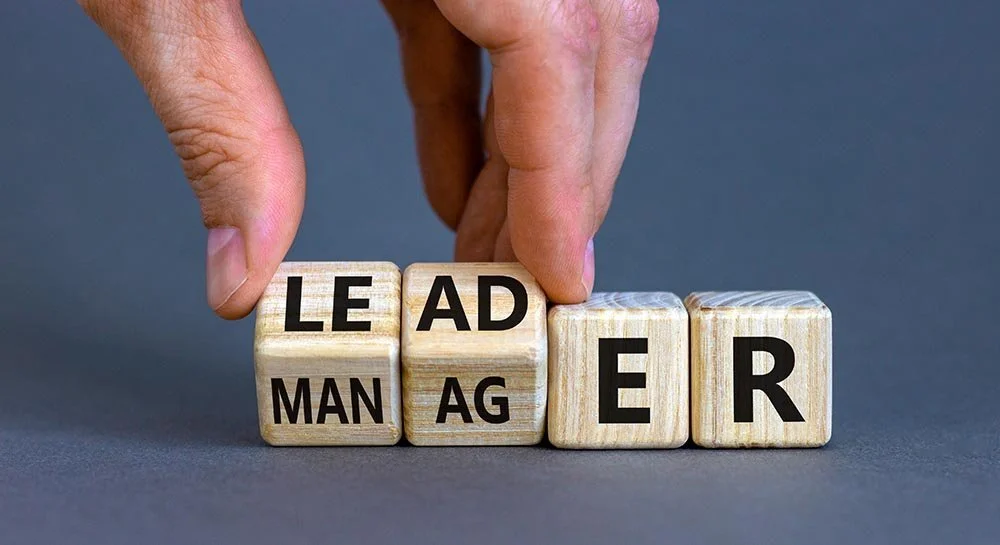
Leadership and management are closely connected, but they serve different purposes.
Management focuses on planning, organising, coordinating and measuring work. Leadership focuses on direction, influence, trust and the behaviour that helps people commit to a shared purpose.
These responsibilities overlap in practice. A manager allocating work also needs to explain priorities and listen to concerns; a leader setting direction needs to consider how it will be delivered.
Read our complete guide to the difference between leadership and management.
Humility, confidence and leadership
Confidence helps leaders make decisions, communicate clearly and act when there is uncertainty. Humility helps them listen, learn and recognise that they do not have every answer.
Can leadership be developed?
Leadership can be developed, but it requires more than learning leadership theory.
People develop as leaders when they become more aware of their behaviour, their choices and their effect on others. This is why experience, reflection and feedback are so important.
Tools such as feedback exercises, coaching conversations and 360-degree reviews can help leaders understand their behaviour more clearly.
Leadership Trust has been developing leaders since 1975. Participants learn through activities that reveal how they lead, followed by review and feedback from others. Shared discovery helps them compare what they intended with what other people experienced.
For leaders who need individual support, leadership coaching can help turn reflection into clearer action.
Consider a leader who believes they give people plenty of freedom, while their colleagues experience their frequent interventions as a lack of trust. Exploring that difference can reveal a specific change to practise, such as agreeing when to check progress and when to step back.
For more on the history behind this work, read about 50 years of Leadership Trust.
Explore examples of the impact this work has had across organisations on our results page.
Explore our leadership development programmes to find out how Leadership Trust can support your leaders, teams and organisation.
