
Leadership development works. Just not the way most of it is designed.

By Sinead Daly, Global Business Manager, Leadership Trust
The global leadership development industry is worth over £300 billion a year. The majority of that spend goes on skills-based programmes: developing knowledge, frameworks, models, tools and techniques.
The research on what that investment actually produces is uncomfortable reading. Studies going back to Baldwin and Ford’s landmark 1988 paper in Personnel Psychology - and confirmed repeatedly since, including Ford, Baldwin and Prasad’s 2018 review in the Annual Review of Organizational Psychology - consistently find that only around 10-15% of what people learn in training transfers into changed behaviour back at work.*
Which means most organisations are paying for 85-90% of their leadership investment to disappear.
The problem isn’t the quality of the content, the calibre of the facilitators, or the motivation of the people in the room. It’s something more fundamental than any of those things.
Why knowledge fades
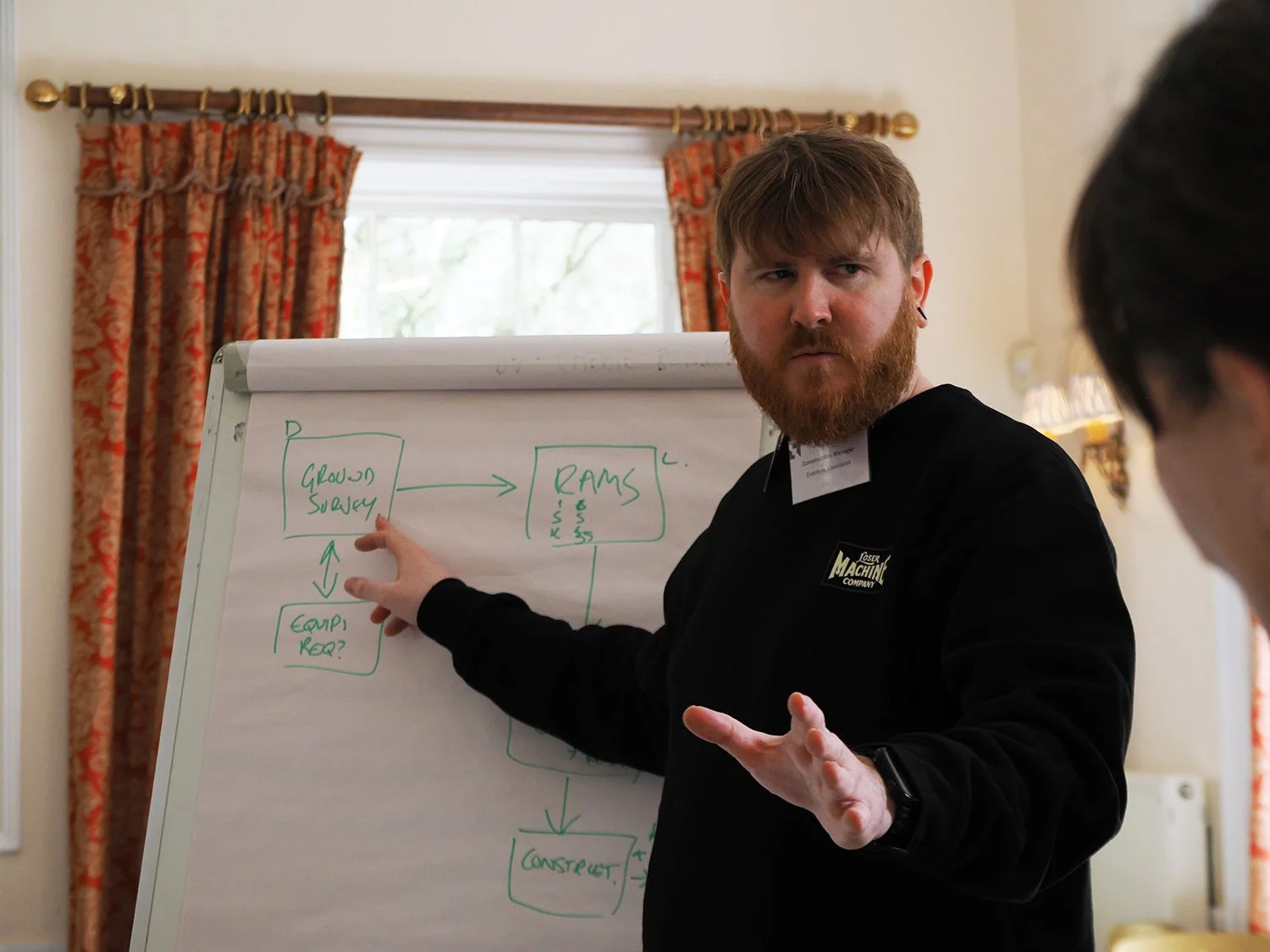
The problem is straightforward. You can understand something intellectually and still not change how you behave. Knowing that you need to listen more, delegate better, or have difficult conversations earlier doesn’t mean you’ll actually do it differently when the pressure is on. Knowledge and behaviour are not the same thing. Most leadership training invests heavily in the first and does very little about the second. And without something to anchor new insight to - a real experience, real pressure, real feedback - the knowledge sits in short-term memory and fades.
Leadership development that changes behaviour works differently. When a leader genuinely shifts how they show up, that shift is lasting - because it’s rooted in experience, not instruction. It changes how they lead, not just what they know about leadership.
The evidence on this is consistent across decades of research – see some of the key studies at the end of this article.
Behavioural change doesn’t happen through instruction alone. It happens through experience: real challenge, real pressure, honest observation, and the kind of structured reflection that makes patterns visible - and hard to walk away from.
What’s actually at stake
The commercial consequences of leadership behaviour are direct and measurable, and they run through every part of an organisation.
Team performance is shaped by how a leader behaves, not what they know. People leave managers, not companies - and the cost of replacing them is significant. A restructure lives or dies on how leaders behave through it. So does a difficult conversation, a team that’s lost its way, a decision that keeps getting deferred.
The budget isn’t just wasted. The problems it was supposed to address are still there - and still costing the business.
The return on genuine behavioural development isn’t 1:1, it’s 1:many.
A single leader who genuinely changes how they show up doesn’t just improve their own performance - they change the daily experience of every person in their team. Better decisions get made. Difficult conversations happen. People have the space to do their best work. That’s what drives organisational performance and results - not the number of people who attended a programme, but the number who came back and led differently.
“It’s the only time I’ve honestly received an awareness of who I am, what I do well and what I really don’t do well. I’ve come back from that week and every facet of my life has changed. Just because you believe you can lead, doesn’t mean you’re effective.”
Peter Hosking, CEO, WashCo
What changes the equation
A leader cannot change behaviour they cannot see. And they cannot see it clearly from inside their own routine, hierarchy, habits and relationships. The conditions have to change before the person can.
This is what we do at Leadership Trust, and it’s what makes our approach different from most of what exists in the market.
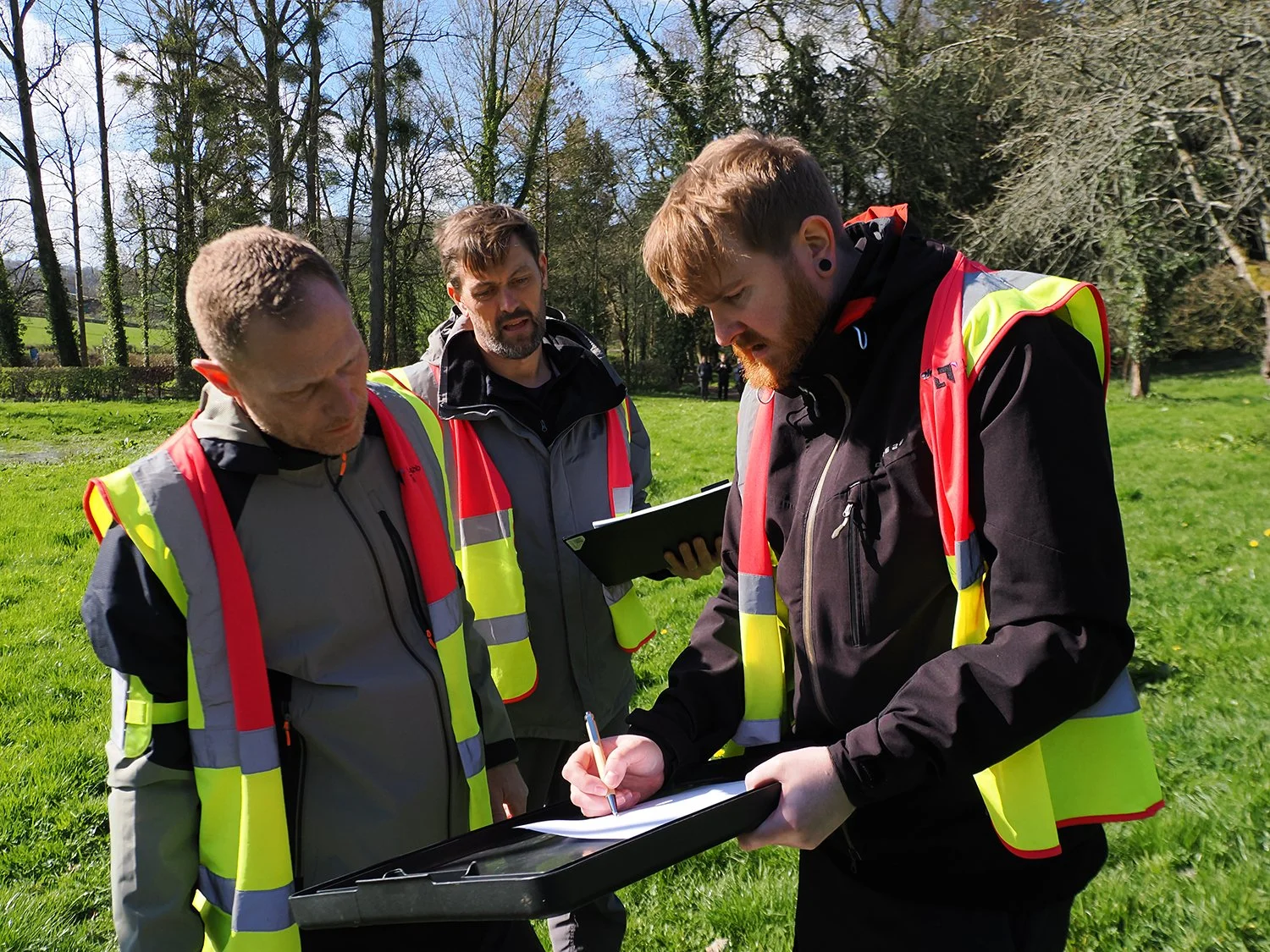
We take leaders out of their own environment - usually at Chelsea Parkfields, our residential estate in Herefordshire - away from the office, away from home, away from the usual distractions. They work in small groups, taking on real challenges - collaborative, high-pressure - where how they lead is visible to everyone around them. Not through a test, but through the natural way a person’s habits and tendencies emerge when the stakes feel real.
Then something happens that I think is one of the most important parts of what we do. Leaders receive feedback from their peers - not from a line manager with an agenda, not from our facilitators, not from a coach who only has one side of the story, but from a group of people who have spent days watching them lead and been led by them in turn. People who have no prior relationship, no office politics, no reason to soften what they saw. What comes back is specific, honest and often surprising. Most people have a sense of how they come across. Most are at least partly wrong!
That gap - between how a leader thinks they show up and how others actually experience them - is where the real work happens. You can’t address something you can’t see. And most leadership development, however well designed, never creates the conditions for that kind of clarity.
We do share theory too, but only after a leader has lived something - felt it, struggled with it, been seen clearly by others in it. It lands completely differently. It makes sense and has somewhere to go. Experience, feedback, theory and personal reflection - in that order, change becomes not just possible but lasting.
“Before working with Leadership Trust all the training we did was conventional classroom-based. This was our first exposure to experiential learning - a big change for us with much better results. We are moving all our functional and competency training from classroom to experiential, so Leadership Trust has had an impact on not just our leadership, but on how we train generally and get the most from our training budget.”
Salman Goheer, Director HR & Administration, Engro Foods
I know this because I’ve done it myself. I went through Leadership Trust’s Leadership in Management programme - and what I experienced that week was transformational for me and is exactly what this piece is about.
The organisations that invest in how their leaders actually behave - not just what they know - are the ones that outperform, retain their best people, and build cultures worth working in.
If you’d like to talk about what that looks like in practice for your organisation, I’d welcome the conversation.
Sinead Daly, Global Business Manager, Leadership Trust
*References and further reading
Baldwin, T.T. and Ford, J.K. (1988). Transfer of training: A review and directions for future research. Personnel Psychology, 41(1), 63–105.
Ford, J.K., Baldwin, T.T. and Prasad, J. (2018). Transfer of training: The known and the unknown. Annual Review of Organizational Psychology and Organizational Behavior, 5(1), 201–225.
Baldwin, T.T., Ford, J.K. and Blume, B.D. (2009). Transfer of training 1988–2008: An updated review and new agenda for future research. International Review of Industrial and Organizational Psychology, 24, 41–70.
Blume, B.D., Ford, J.K., Baldwin, T.T. and Huang, J.L. (2010). Transfer of training: A meta-analytic review. Journal of Management, 36(4), 1065–1105.
Blume, B.D., Ford, J.K., Surface, E.A. and Olenick, J. (2019). A dynamic model of training transfer. Human Resource Management Review, 29(2), 270–283.
Diekmann, C.S. et al. (2025). Dynamic training transfer in leadership development. International Journal of Training and Development.
DDI Global Leadership Forecast 2025. Development Dimensions International.
